
Springfield Eye Care: Exams for Children and Parents
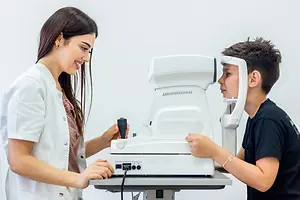
Family calendars have a habit of filling themselves. School events, sports, work meetings, dentist visits, grocery runs, and a dozen other commitments compete for the same few open spaces. Eye exams deserve a place on that calendar too, for the kids and the grown-ups driving them there.
Vision needs change throughout life. A child’s eye exam pays close attention to developing vision and skills used at school and play. An adult exam may focus more heavily on prescription changes, eye health, medical history, and conditions that become more common with age.
At Optique Family Vision Care Springfield, Springfield eye care means looking at each family member as an individual. Dr. Joseph Culp and our eye care team take time to listen, explain what we find, and provide care based on each patient’s age, health, vision, and daily routine.
Why Does Family Eye Care Matter?
Good family eye care grows with you.
Children use vision while learning to read, writing, playing sports, and making sense of the world around them. Adults depend on their eyes for work, driving, screens, hobbies, and caring for their families. As the years pass, regular exams also become an opportunity to monitor eye health.
That makes a comprehensive eye exam more than a prescription check. At Optique Family Vision Care Springfield, eye exams can assess visual clarity, eye muscle function, and overall eye health. Our team also screens for eye diseases and conditions based on the patient’s age and needs.
Keeping eye care in the family routine creates an ongoing picture of how vision changes through different stages of life.
What Do Children’s Eye Exams Check?
Kids rarely walk into the kitchen and announce that they have developed a refractive error. They work with the vision they have, which means parents sometimes notice changes first.
You might see your child squinting, sitting closer to something they want to see, or having trouble with visual activities. School can also bring new visual demands as children spend more time reading, writing, using screens, and looking between their desks and the front of the classroom.
Children’s eye exams at Optique Family Vision Care Springfield can check for nearsightedness, farsightedness, and astigmatism while also monitoring visual development.
A pediatric eye exam may include:
- Vision testing
- Eye alignment checks
- Depth perception evaluation
- Eye teaming and tracking assessment
- Overall eye health screening
Age-appropriate testing helps the doctor gather useful information even when a young patient has trouble explaining exactly what they see.
When Should Pediatric Eye Care Begin?
Regular pediatric eye care gives families an opportunity to follow vision as a child grows.
Optique Family Vision Care Springfield sees children for comprehensive eye exams and recommends starting around age 5. Children with vision concerns, risk factors, or symptoms may need a different schedule based on their eye doctor’s guidance.
School age can be an especially useful time to pay attention to visual habits. Reading, handwriting, sports, classroom screens, and other activities place growing demands on a child’s eyes.
If your child already wears glasses or contacts, regular visits also give the eye doctor a chance to monitor prescription changes and check how their current vision correction is working.
How Can Springfield Eye Care Help Parents?
Parents spend plenty of time thinking about their children’s health. Their own eyes deserve a spot on the list.
Adult vision can change gradually. A prescription that once worked beautifully may start feeling less comfortable. Close-up tasks can become harder with age, and health conditions such as diabetes can also affect the eyes.
Optique Family Vision Care Springfield recommends regular comprehensive eye exams to monitor vision and eye health. During an adult exam, Dr. Culp can review changes in your eyesight, discuss symptoms or concerns, and screen for conditions such as cataracts, glaucoma, macular degeneration, and diabetic eye disease.
That makes the appointment useful even when your current glasses still seem to be doing their job.
What Should Parents Share at an Eye Exam?
An eye exam works best as a conversation.
For children, parents can share changes they have noticed at home, concerns raised by teachers, previous eye problems, and family eye health history. For their own appointments, adults can mention changes in vision, medical conditions, medications, screen habits, headaches, dryness, and other eye symptoms.
At Optique Family Vision Care Springfield, Dr. Culp believes strong eye care starts with listening. Those details help create context around what happens during the exam.
The eye chart tells us something important. Your daily experience fills in the rest of the picture.
How Do Family Eye Exams Change With Age?
The same pair of eyes can have very different needs at 8, 28, and 58.
For children, exams often center on visual development, refractive errors, eye alignment, and the skills they use throughout school and play. As patients move into adulthood, their work environment, screen use, hobbies, medical history, and changing prescriptions become part of the conversation.
Around age 40, many adults begin experiencing presbyopia, an age-related change that makes close-up focusing more difficult. Reading menus, checking a phone, or working with small print may start calling for a little more visual help.
Later in life, eye health monitoring takes on greater importance as the risk of conditions such as cataracts, glaucoma, and macular degeneration increases.
Regular family eye exams give your optometrist a chance to follow these changes through each stage.
How Can Eye Exams Detect Eye Disease?
Clear vision can feel reassuring, but visual clarity tells only part of the story.
A comprehensive eye exam also gives your optometrist a close look at eye health. Optique Family Vision Care Springfield uses detailed testing and advanced diagnostic technology to screen for conditions such as glaucoma, cataracts, macular degeneration, and diabetic eye disease.
Medical history matters here too. People with diabetes, high blood pressure, and other health conditions may need closer monitoring because changes elsewhere in the body can affect the eyes.
Regular exams create an opportunity to identify changes and discuss appropriate follow-up care. For families, that means an eye appointment can serve two purposes at once: checking how well you see and monitoring the health of the eyes themselves.
Which Vision Correction Fits Family Eye Care?
Sometimes an eye exam leads to a new prescription. Then comes the more personal question: How do you want to see?
Glasses can become part of a child’s personality or an adult’s everyday style. Optique Family Vision Care Springfield offers eyewear designed to balance prescription needs, comfort, function, and personal taste.
Contact lenses provide another option. The practice offers daily disposable, bi-weekly, monthly, multifocal, and toric lenses, along with fittings for a range of prescriptions.
Children and teens may also be candidates for contact lenses when their maturity, eye health, and daily habits make lens wear a good fit. Active kids may appreciate contacts for sports, while adults may enjoy the flexibility of moving between glasses and contacts.
The right choice depends on the person wearing them. That is where personalized eye care earns its place.
How Does Myopia Management Help Children?
A child who becomes increasingly nearsighted may need more than another pair of stronger glasses.
Myopia, or nearsightedness, causes distant objects to appear blurry. It often develops during childhood and can progress as a child grows.
Optique Family Vision Care Springfield offers myopia management designed to help slow the progression of nearsightedness in children. Treatment options may include specialty contact lenses or prescription eye drops based on the child’s individual needs.
Regular pediatric eye exams help the doctor monitor changes in a child’s prescription and discuss whether myopia management belongs in their care plan.
For parents, tracking those changes creates a clearer picture of how their child’s vision develops from one year to the next.
How Can Families Prepare for an Eye Exam?
A little preparation can make a family eye care visit more useful.
Bring current glasses or contact lenses and a list of medications when appropriate. Think about any recent changes in vision or eye comfort. Parents can also ask children about what they see at school, during sports, while reading, or when using screens.
For a child’s appointment, teacher observations can provide helpful context. A comment about squinting at the board or struggling with visual tasks gives the eye doctor another piece of information to consider.
Adults can think about their own routines too. Changes while driving at night, reading small print, working at a computer, or wearing contact lenses are all worth mentioning.
Your appointment becomes more valuable when your optometrist understands how you use your vision once you leave the exam room.
Schedule Family Eye Care in Springfield
From a child’s first school years to the changing vision that comes with adulthood, every stage brings its own set of visual needs.
Optique Family Vision Care Springfield has served Springfield and neighboring communities for more than three decades. Dr. Joseph Culp provides personalized care for patients of all ages, including pediatric eye exams, comprehensive adult exams, myopia management, contact lens fittings, dry eye treatment, and eye disease management.
Keep eye care on the family calendar. Schedule an eye exam with Optique Family Vision Care Springfield in Springfield and give every generation in your household dedicated time for their vision and eye health.